CURATION: The Fierce Urgency of Now
Role: Curator; Exhibition Creative Direction
Year: 2025
Location: Chicago, Illinois
Partners: IMAN Central; Chicago artists and cultural partners
Medium: Multidisciplinary exhibition including photography, painting, installation, and archival materials
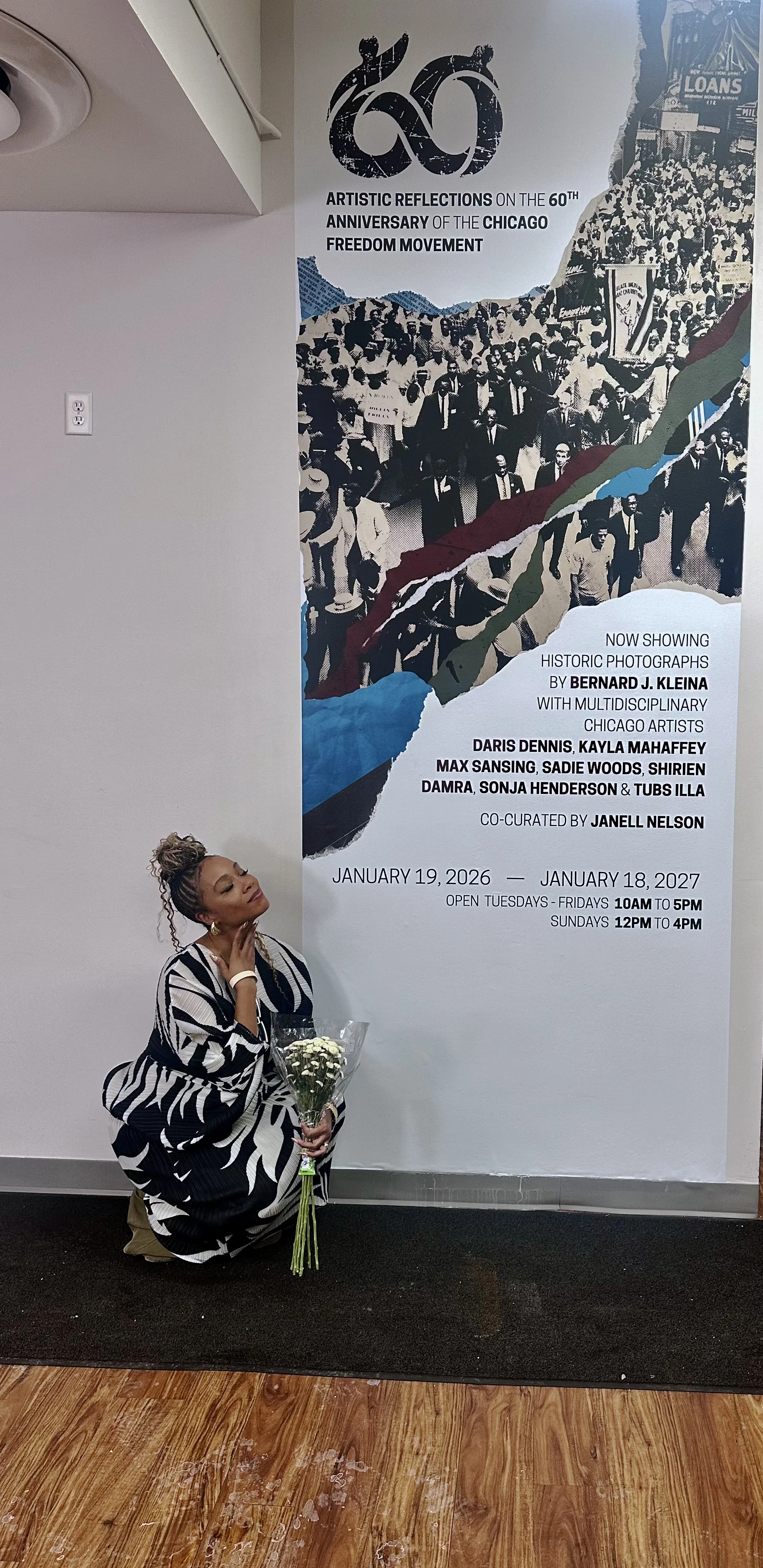
Curated by Janell Nelson in 2026 at IMAN — the Inner-City Muslim Action Network — in Chicago, The Fierce Urgency of Now: Artistic Reflections on the Chicago Freedom Movement was presented at IMANifest Arts Studios Gallery in partnership with IMAN Arts & Culture and the Terra Foundation for American Art. The exhibition marked the 60th anniversary of Dr. Martin Luther King Jr.’s 1966 Chicago Freedom Movement marches, inviting contemporary artists to reflect on the enduring relevance of King’s organizing in Chicago and the unfinished work of racial and housing justice.
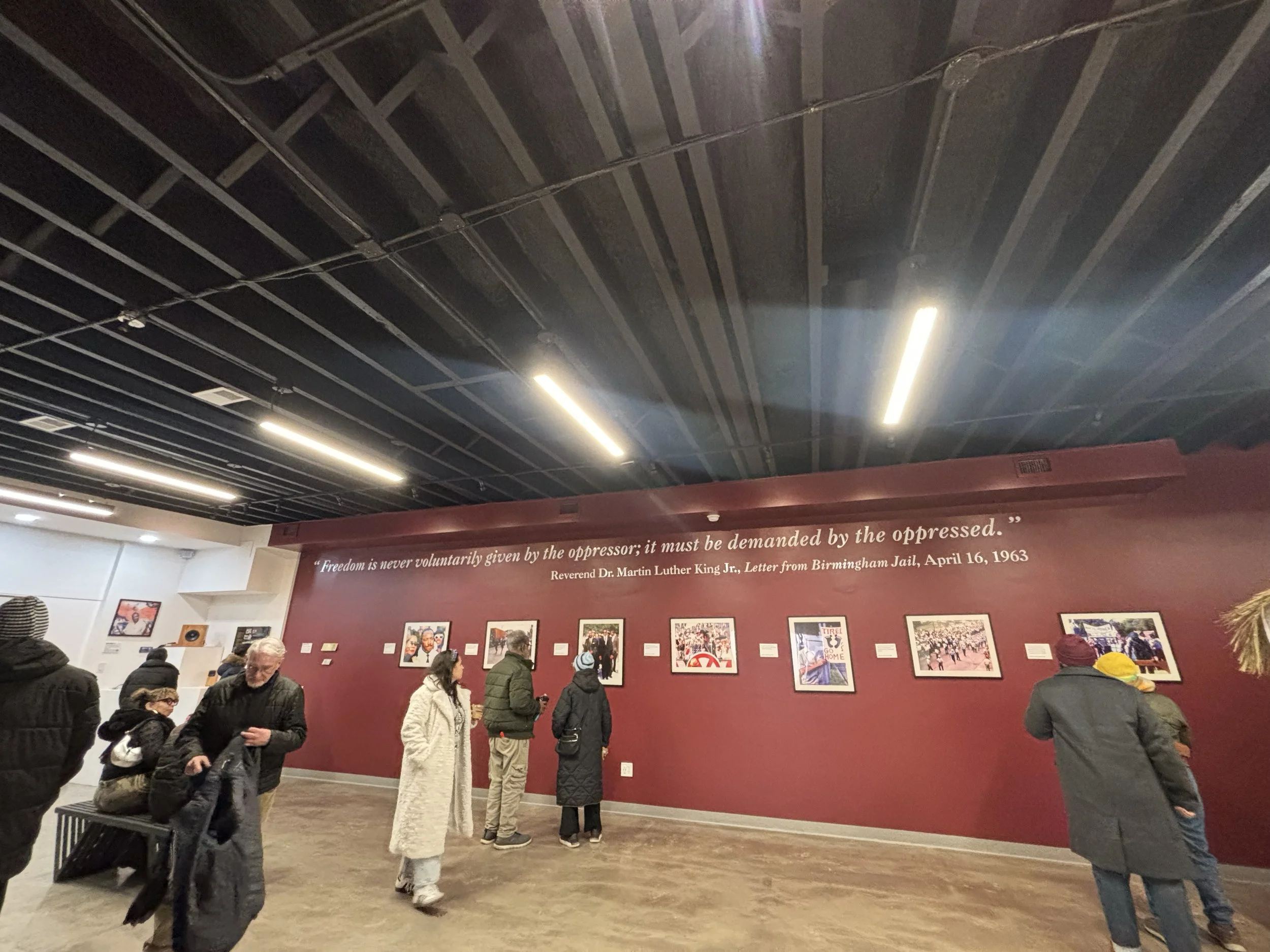
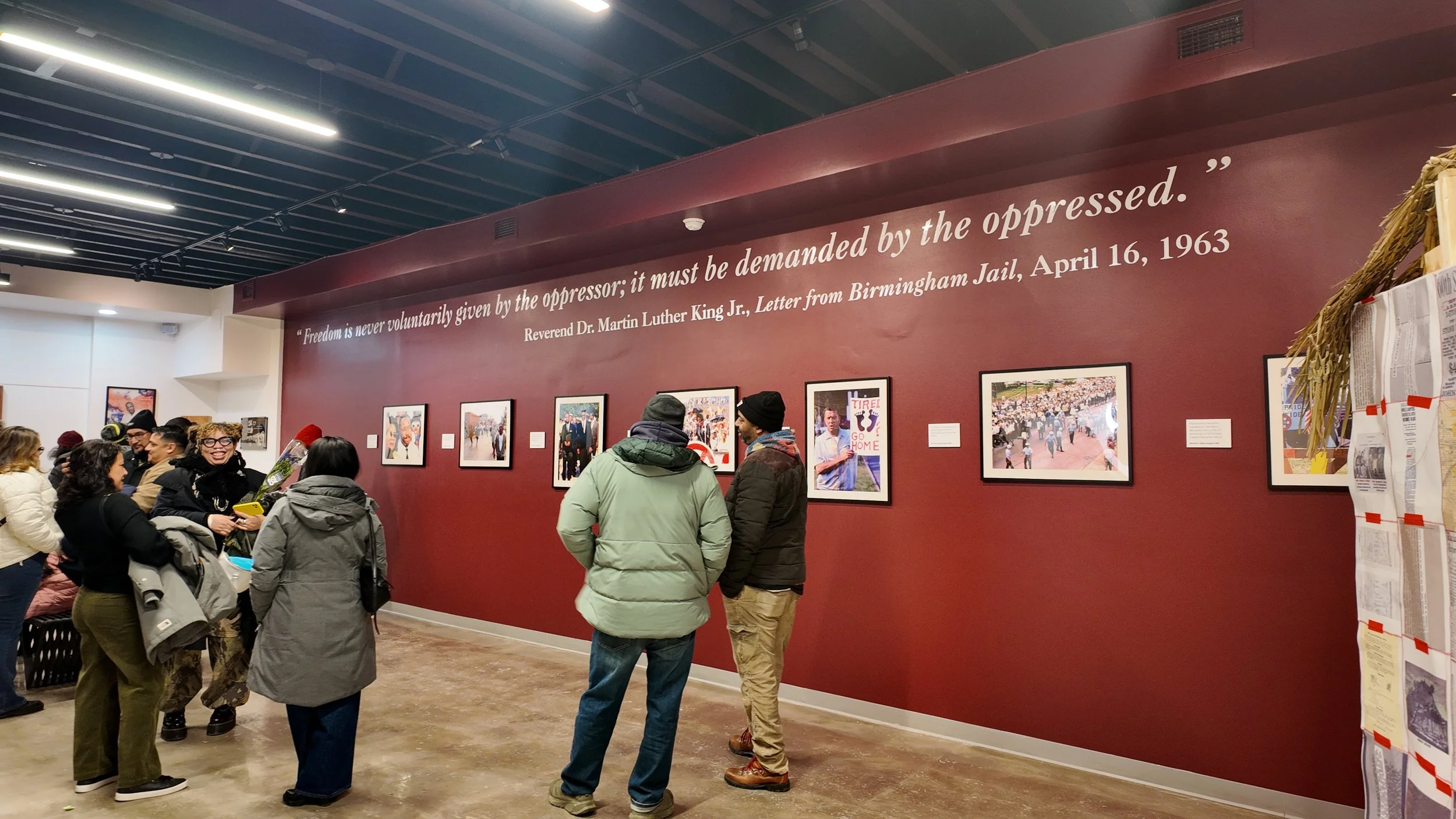
The exhibition brought together works by Max Sansing, Darius Dennis, Sonja Henderson, Shirien Damra, Tubs Illa, Sadie Woods, and Kayla Mahaffey, alongside historical context provided through archival materials and panel contributions by Katanya E. Raby. Drawing from Bernard Kleina’s photographs documenting the Chicago Freedom Movement, the exhibition paired archival imagery with contemporary artistic responses spanning painting, installation, mural practice, and mixed media—bridging past and present through visual storytelling.
Nelson conceived the exhibition’s curatorial framework and led its artist selection, advocacy, and project direction, identifying a cohort of artists whose practices could meaningfully engage the historical material while speaking to present-day civic realities. She also developed and designed the project’s strategic pitch deck for IMAN and funding partners, shaping the narrative, visual identity, and institutional framing of the exhibition from concept through realization.
Click here for Press coverage
photo credits: Block Club Chicago; Michael Bussey
*** scroll down for full exhibition narrative ***
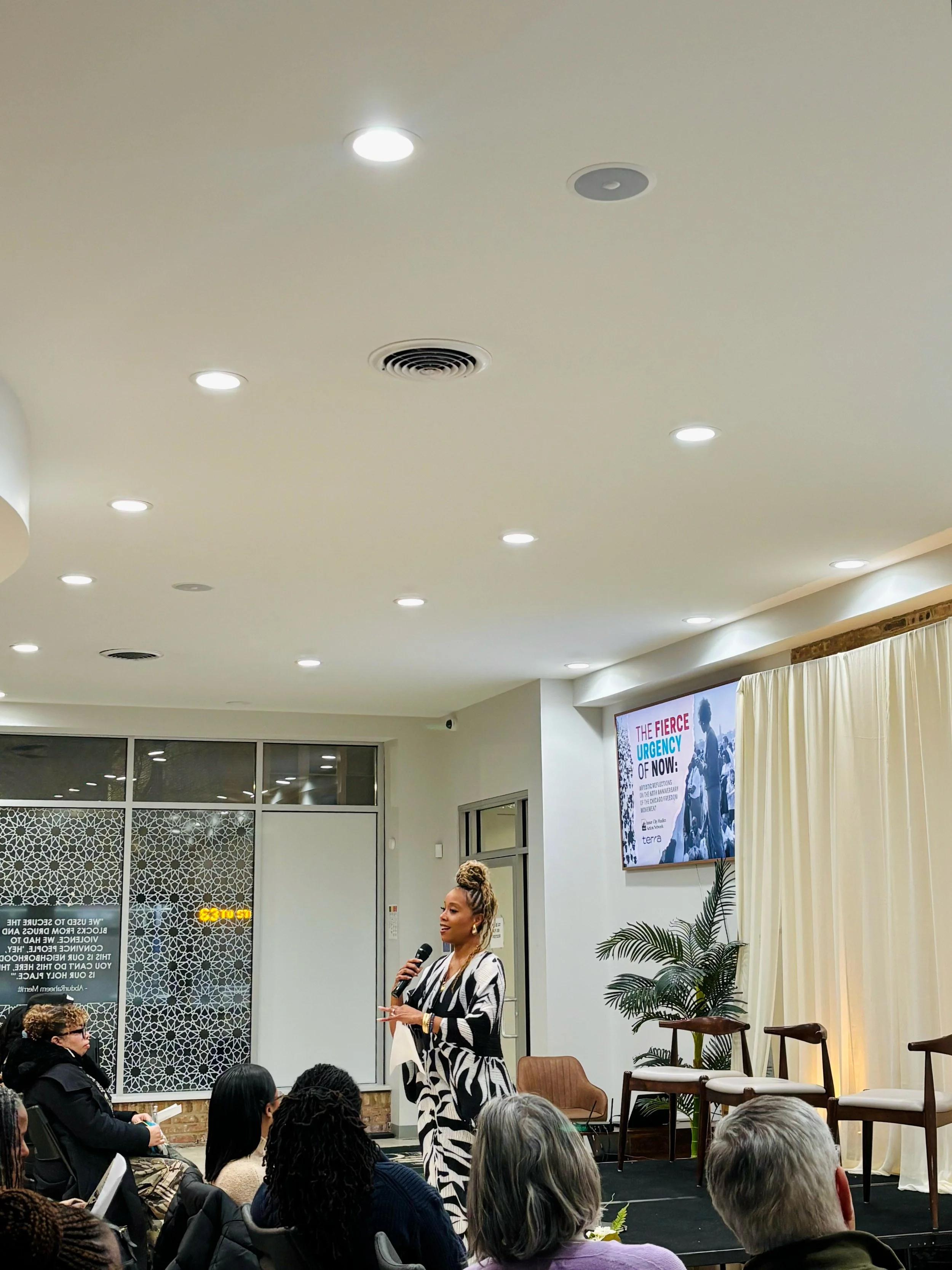
-
EXHIBITION NARRATIVE
The Fierce Urgency of Now: Artistic Reflections on the Chicago Freedom Movement
Entering The Fierce Urgency of Now, visitors are invited into a conversation between two moments in Chicago's history, separated by sixty years yet connected by an unfinished pursuit of justice.
The exhibition's historical foundation is a collection of color photographs by Bernard Kleina, documenting Dr. Martin Luther King Jr.'s 1966 Chicago Freedom Movement. Part of IMAN's curated collection and their original exhibition plans, the photographs capture demonstrators, community organizers, and the racial hostility encountered during the campaign for fair housing. Unlike the familiar black-and-white imagery through which the Civil Rights Movement is often remembered, Kleina's photographs render these events with striking immediacy.
To complement this historical material, Janell Nelson came on board to curate a multidisciplinary cohort of contemporary artists, largely drawn from Englewood Arts Collective's creative network, inviting them to interpret the movement's continued relevance through their respective artistic practices. Rather than reproducing Civil Rights-era iconography, the artists were encouraged to consider what freedom, justice, resistance, and collective possibility look like today.
Historical artifacts, secured on loan from the Al Raby Foundation through Nelson's invitation, deepen the exhibition's context. Photographs and weathered commemorative plaques recognize the organizing efforts of Al Raby, Alice Tregay, Andrew Young, and others whose leadership helped propel Chicago's movement. These objects remind visitors that change is made possible through the sustained, often uncelebrated labor of many.
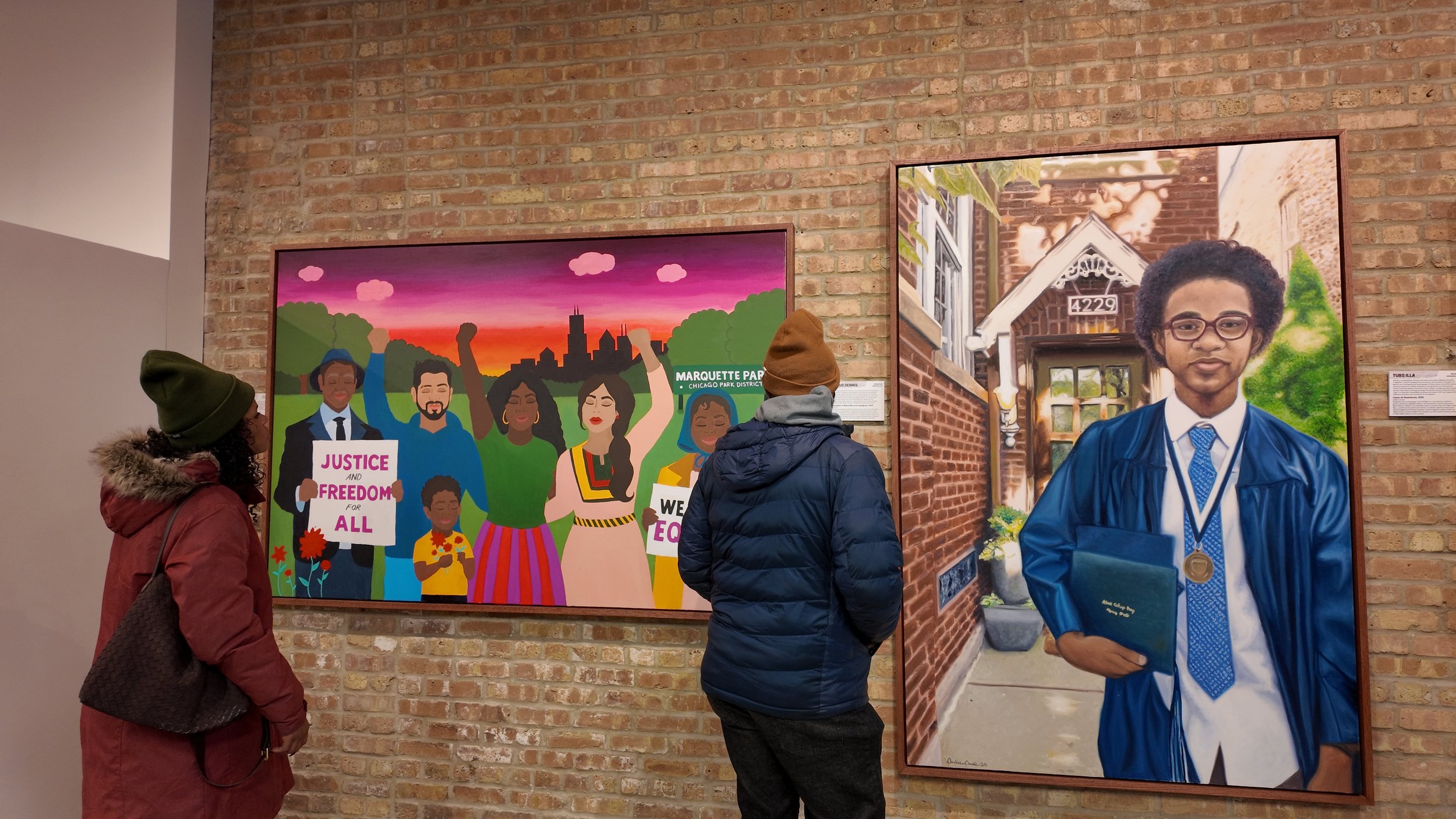
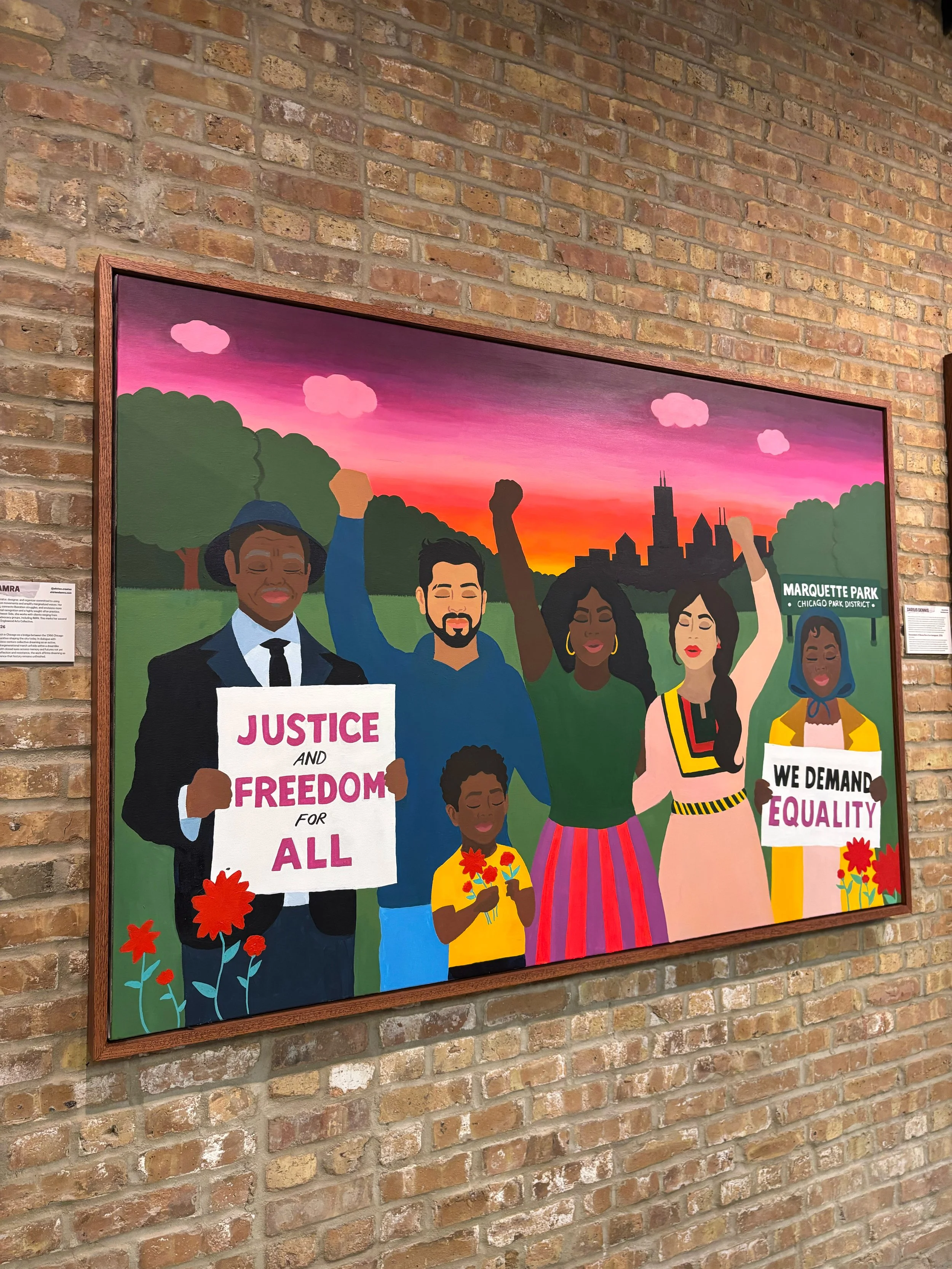
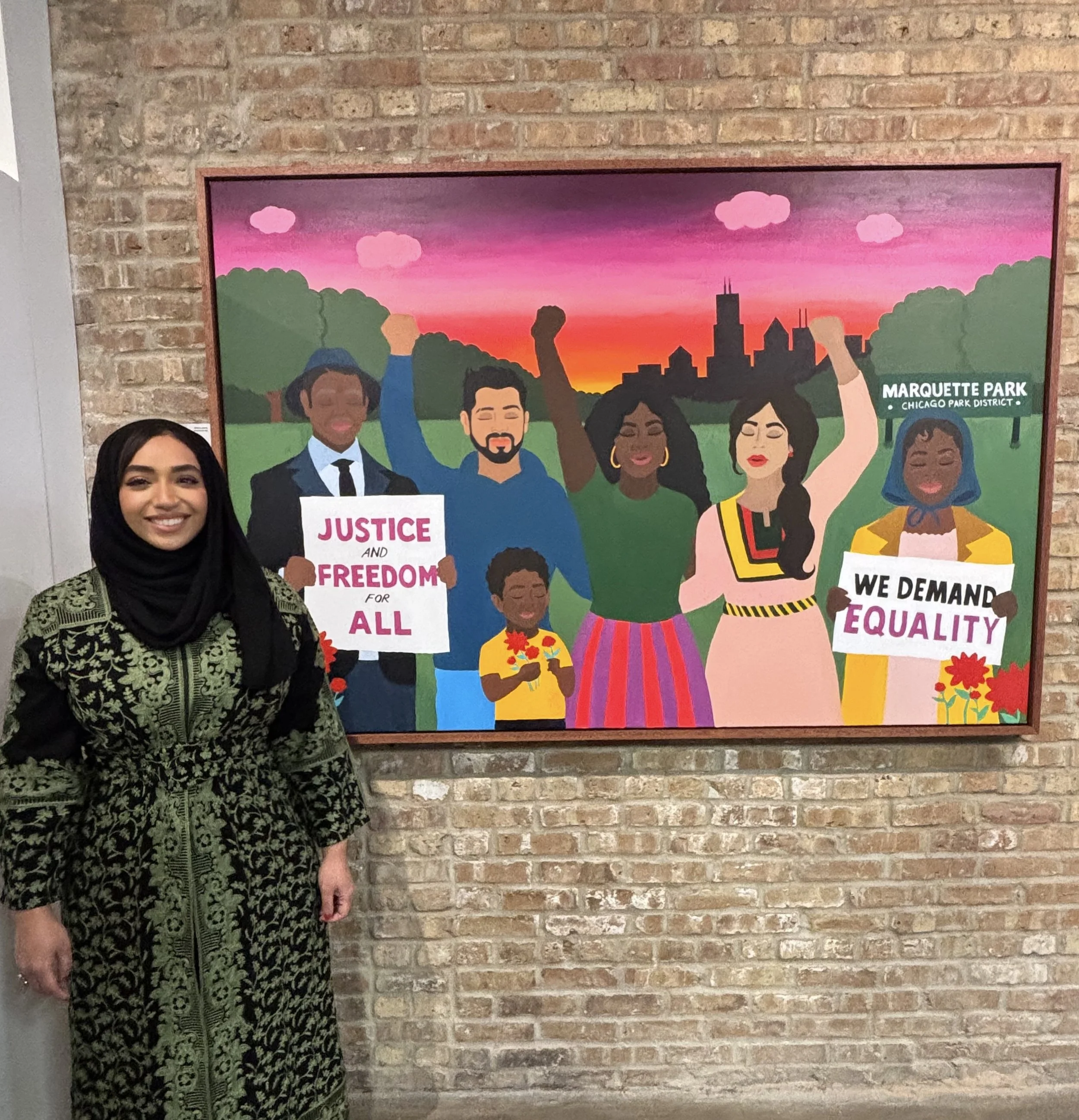
As visitors move beyond the archival material, they encounter Shirien Damra's We Stay Dreaming (2026), a vibrant reimagining of collective protest. Against a dreamlike Chicago landscape, a multiracial, intergenerational procession of demonstrators moves forward with their eyes closed, suggesting that dreaming itself can be a radical, communal practice. The painting bridges the demonstrators of 1966 with communities envisioning new possibilities for Chicago today.
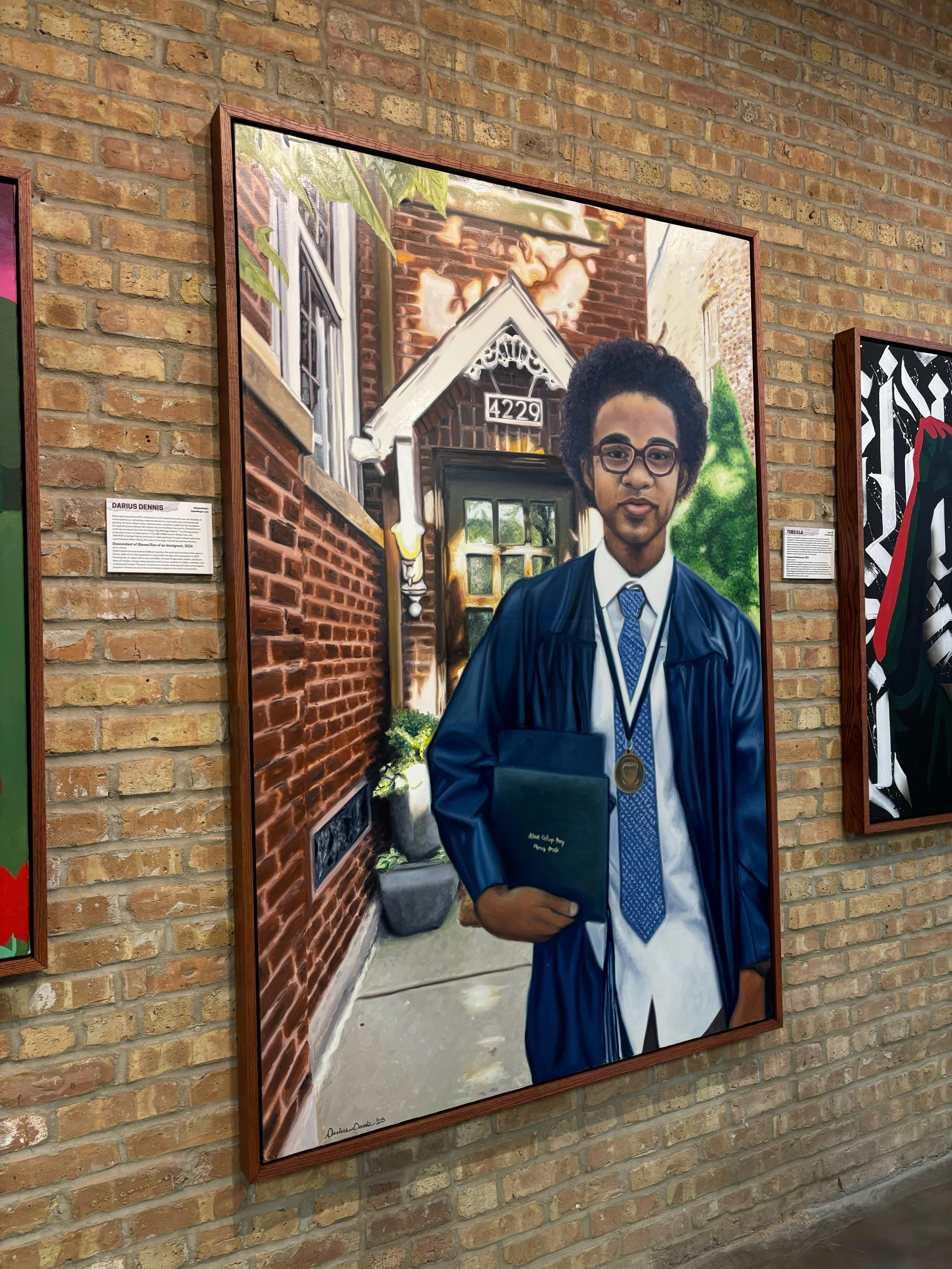
Darius Dennis's Descendant of Slaves/Son of an Immigrant (2026) offers a more intimate portrait of progress. Depicting the artist's son outside his grandfather's home before his 2020 high school graduation, the painting connects education, home, and generational aspiration. Its loose, billboard-inspired painting style bridges past and present, while its domestic setting quietly recalls the housing injustices that first brought King to Chicago.
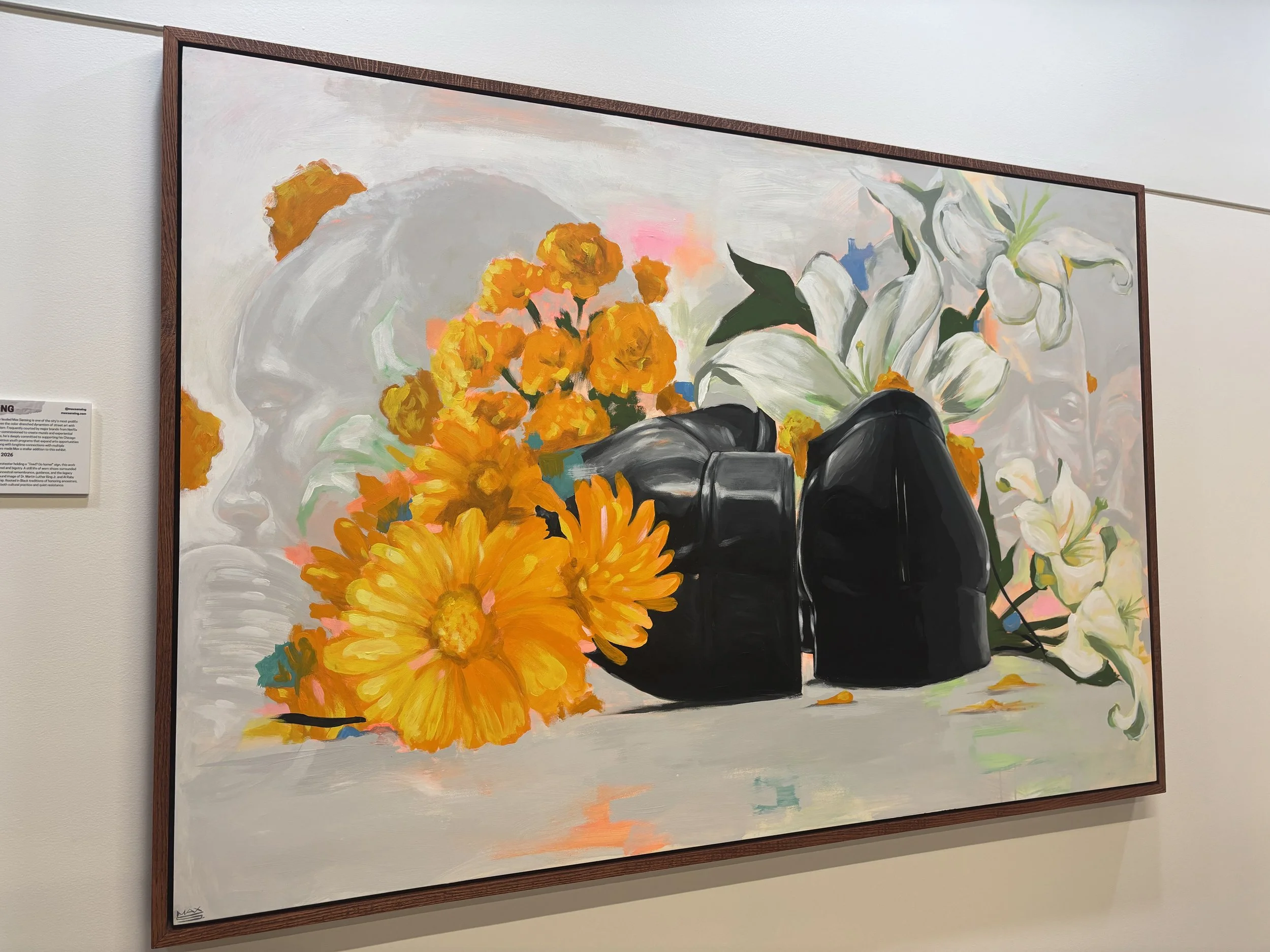
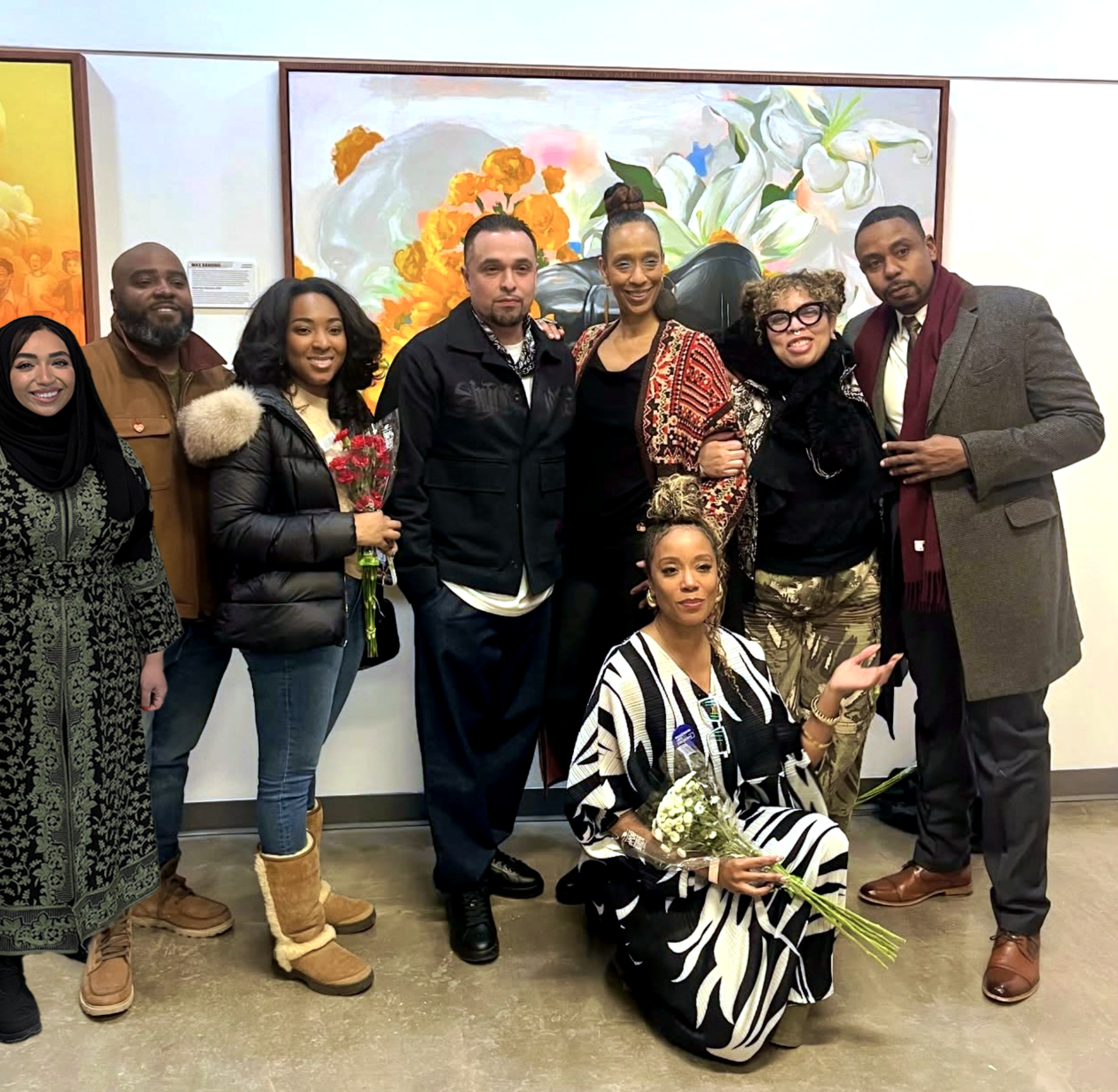
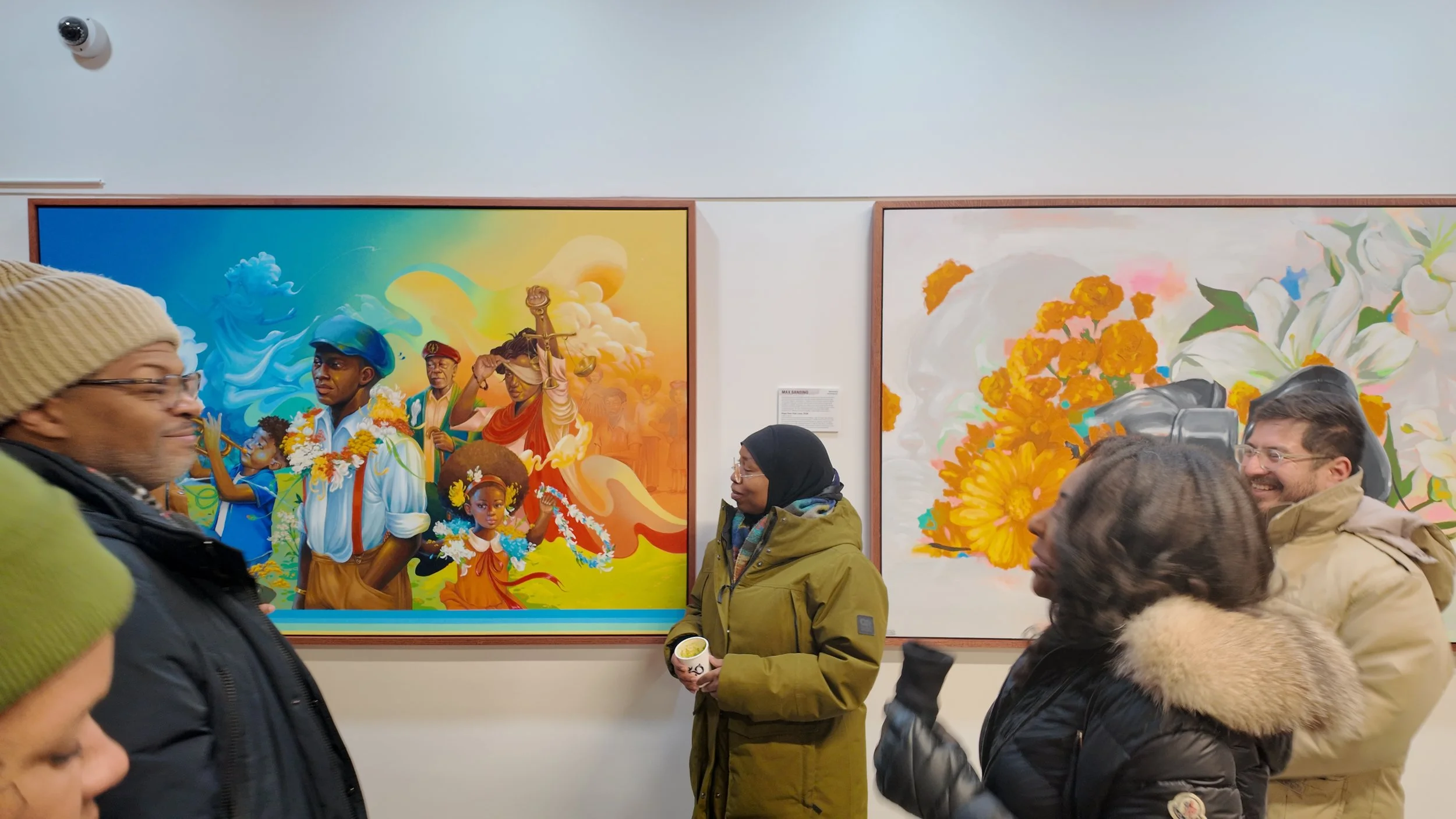
In Max Sansing's Steps Pass Their Lines (2026), a still life of worn shoes surrounded by marigolds and white lilies becomes a meditation on ancestral remembrance and nonviolent resistance. Inspired by Kleina's photograph of a protester holding a hostile "Tired? Go home!" sign, Sansing responds with imagery of endurance and dignity. Behind the shoes, Dr. King and Al Raby appear as enduring figures of leadership, connecting remembrance with the responsibility to continue moving forward.
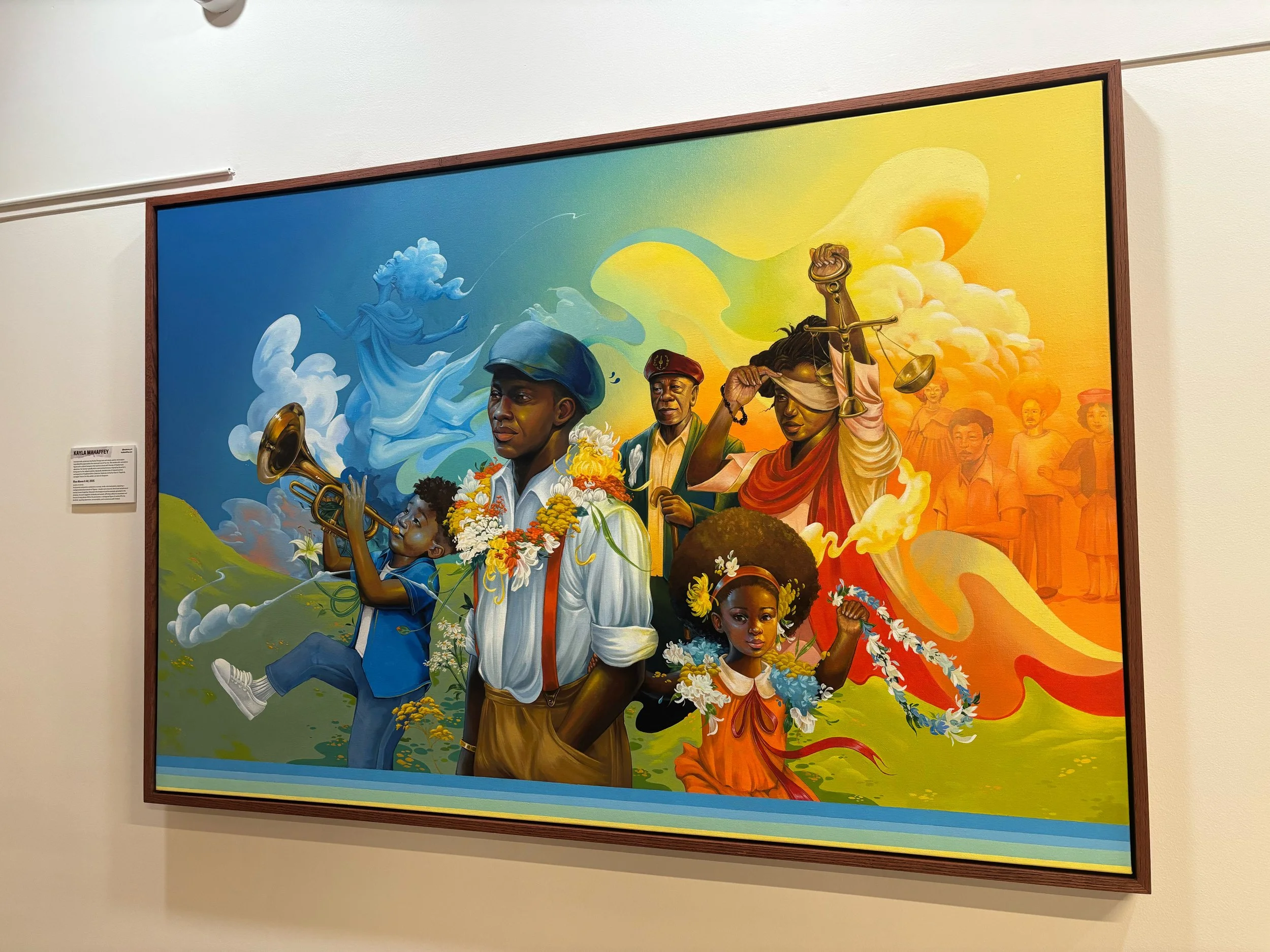
Kayla Mahaffey's Rise Above It All (2025) introduces a surreal, vividly colored procession of ancestral and contemporary figures moving forward together. Ethereal figures gradually become more grounded across the horizontal canvas. Among them, a reimagined figure of Justice lifts her blindfold, suggesting awareness, accountability, and the conscious pursuit of a more equitable future. The work offers an expansive interpretation of freedom, imagining collective progress as both inheritance and aspiration.
The conversation around solidarity extends through Tubs Illa's Líneas de Resistencia (2026), which merges Chicano calligraffiti traditions with imagery of Dr. King and abstracted marchers. The Spanish declaration "Nuestra fuerza es nuestra unidad" (Our strength is our unity) reinforces the importance of Black and Brown solidarity, connecting distinct histories of resistance through the shared language of collective action.
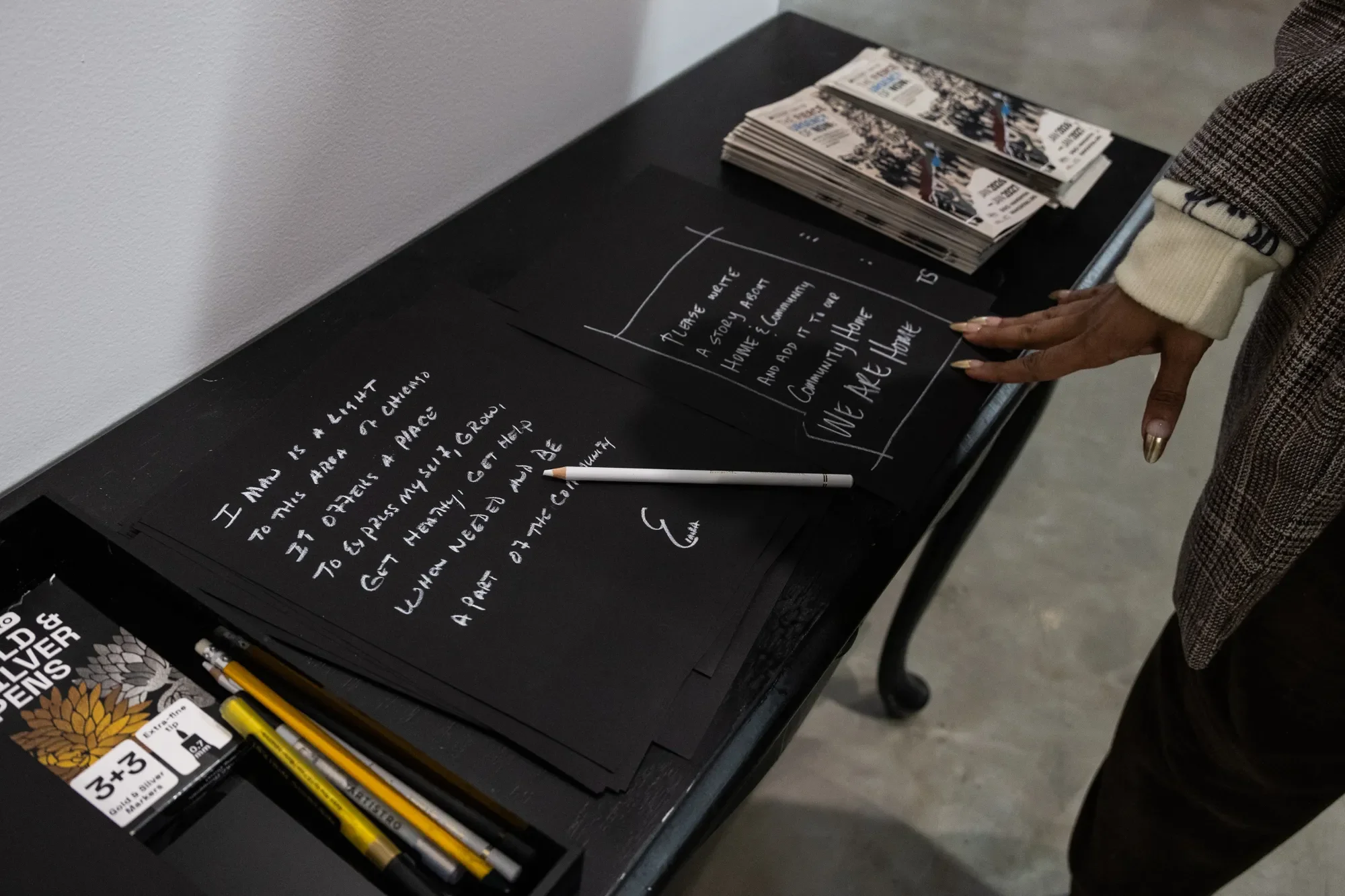
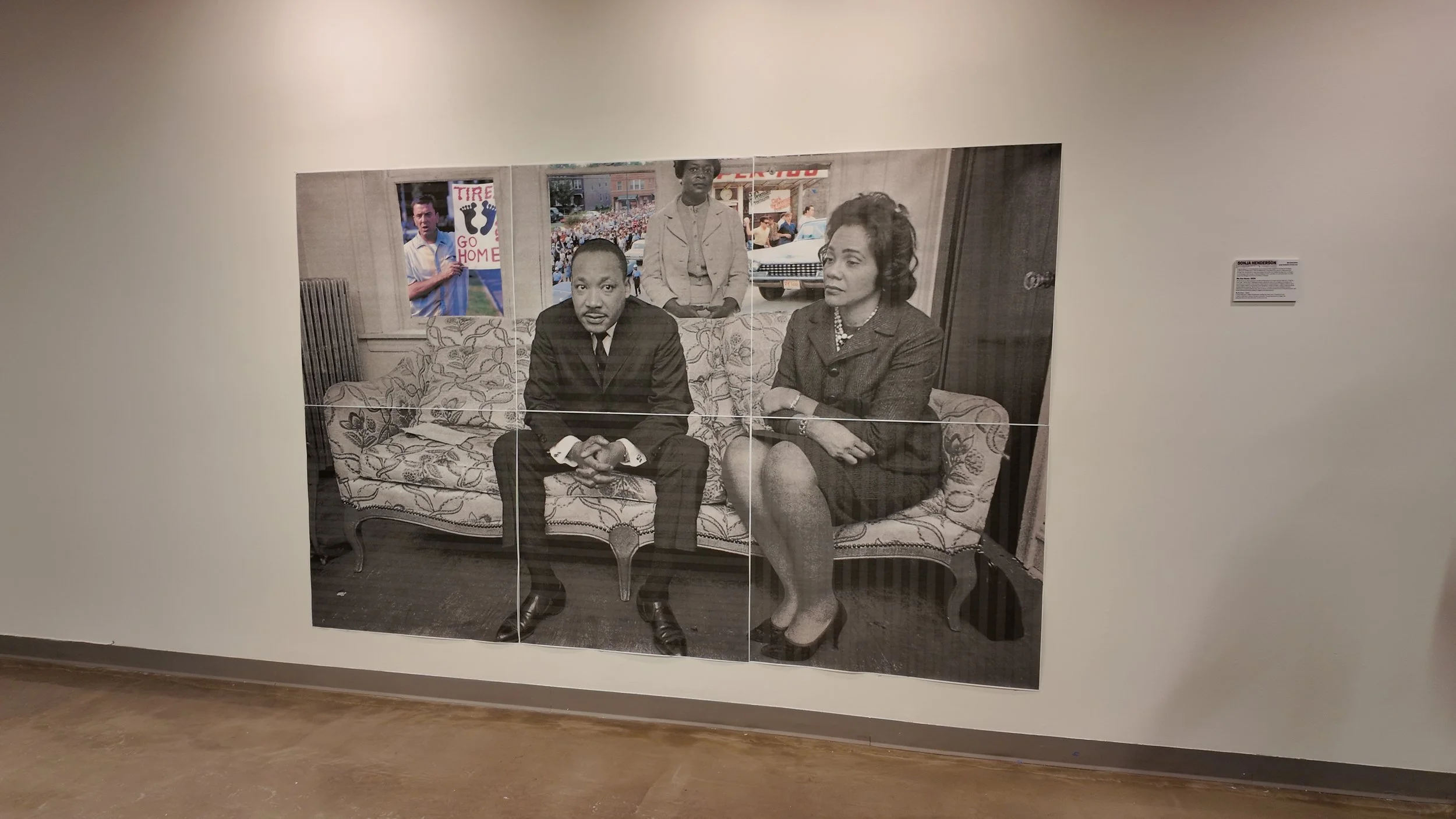
One of the exhibition's most immersive and participatory experiences emerges through Sonja Henderson's We Are Home (2026). Responding directly to Kleina's photograph of a man holding a "Tired? Go Home" sign, Henderson constructs a house-like installation incorporating redlining maps, racial covenants, and banking artifacts that reveal histories of Indigenous land dispossession and discriminatory housing practices. Inside, a layered photographic collage of Dr. King and Coretta Scott King introduces a more intimate meditation on home and family.
Visitors are also invited to contribute their own housing stories on black paper, which becomes part of the evolving installation. Through these personal accounts, housing is understood not only as a matter of policy, property, or historic discrimination, but also as memory, safety, belonging, and lived experience. The audience becomes an active contributor to the exhibition's continuing narrative.
Sound introduces another dimension through Sadie Woods's Freedom Radio (2026), a sound-system installation tracing liberation movements from the 1960s to the present. Layering archival recordings, speeches, chants, and contemporary sound through mixtapes, Woods draws on hip-hop's "each one, teach one" ethos. The installation invites visitors to listen across generations, experiencing sound as an instrument of education, cultural preservation, and collective consciousness.
Together, the artworks do not offer a singular interpretation of King's legacy. Instead, they create multiple entry points into the relationship between historic and contemporary activism, housing and opportunity, identity and belonging, and the role of creative expression in imagining more just futures.
Nelson's curatorial approach also intentionally brings together artists whose practices operate across different creative spheres, from fine art and illustration to public murals, participatory installation, and sound. This multidisciplinary assembly reflects an understanding that art's civic value is not limited to its ability to document injustice. Art can also humanize complex issues, challenge inherited narratives, cultivate empathy, and make room for people to envision something different.
The exhibition's location at IMANifest Arts Studios Gallery further grounds this dialogue in place. Situated near the communities and streets where King's 1966 campaign unfolded, the exhibition connects historical memory to the present-day landscape of Chicago's Southwest Side.
Ultimately, The Fierce Urgency of Now is not intended as a nostalgic tribute to a completed chapter of American history. It is an invitation to confront the unfinished work of justice through art, memory, and collective imagination.
For Nelson, the curatorial proposition is rooted in a simple belief: Art, when mobilized with intention, can help communities not only reflect on the world they have inherited but envision the world they deserve.
The viewer's experience ends where the larger work begins: beyond the gallery walls, in the decisions, relationships, and actions that give the fierce urgency of now its meaning.